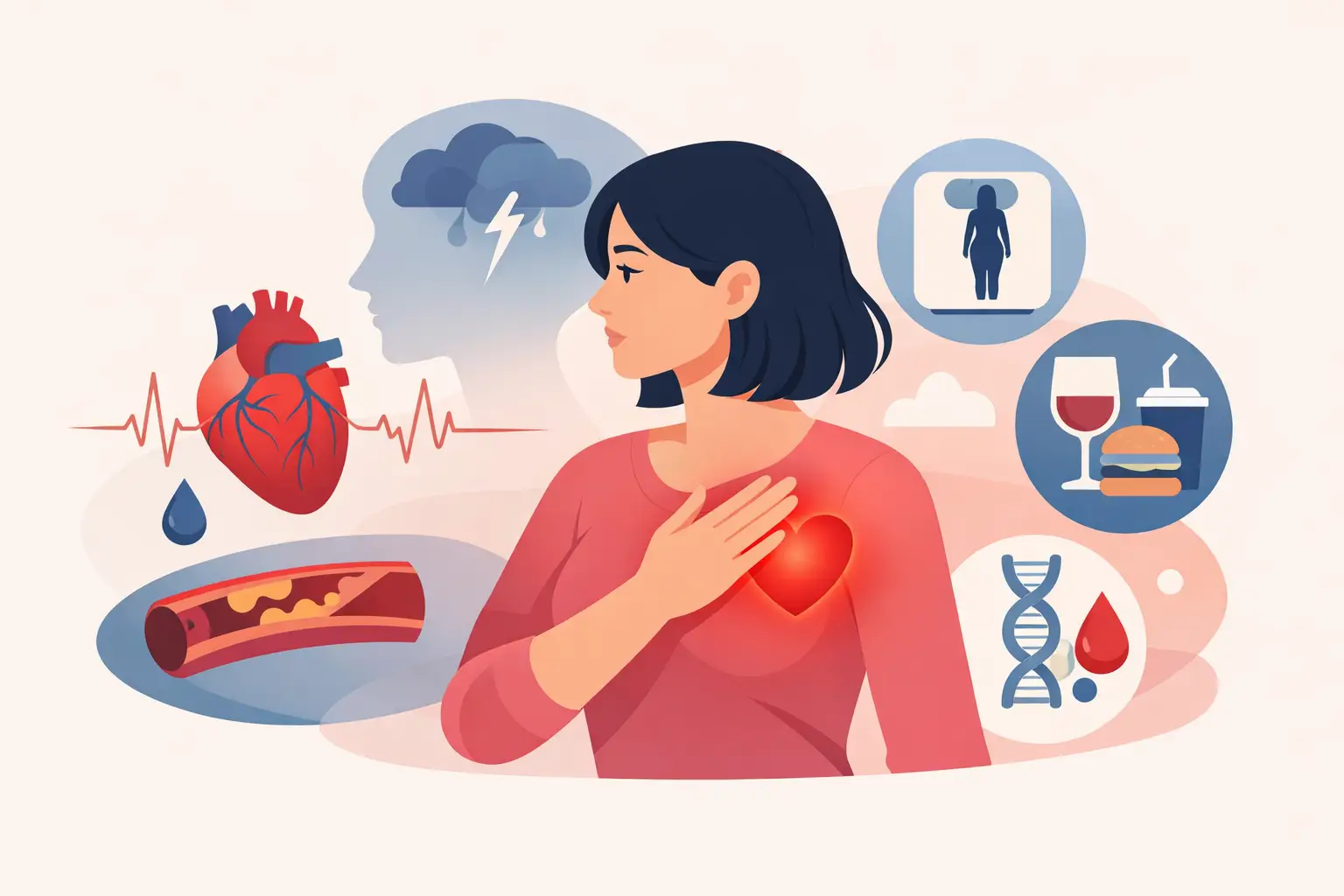
A heart attack can look like a sudden crisis. Often, it is the final event in a process that has been building quietly for years. That is why heart attack risk factors women face deserve direct attention – especially when those same factors can also raise the risk of stroke, cognitive decline, and some cancers.
Heart disease remains a leading cause of death for women worldwide. Yet many women still underestimate their personal risk, particularly if they are active, do not smoke, or have no dramatic symptoms. Prevention cannot wait for chest pain. It begins with seeing the whole pattern: blood pressure, blood sugar, cholesterol, inflammation, sleep, hormones, family history, and daily habits.
Heart Attack Risk Factors Women Often Miss
Some risk factors are familiar. High blood pressure, high LDL cholesterol, diabetes, smoking, inactivity, excess body weight, and a family history of early heart disease all matter. None should be dismissed as a minor issue simply because a person feels well.
But women also face risk patterns that are easy to overlook. Pregnancy complications, hormonal transitions, autoimmune disease, and certain metabolic conditions can reveal a higher lifetime cardiovascular risk. These are not separate footnotes in a medical history. They are signals that the heart and blood vessels may need closer attention.
High blood pressure: the quiet threat
High blood pressure damages artery walls over time and makes the heart work harder. It is a major driver of heart attack and stroke, and it is also connected to changes in the small blood vessels that support brain health.
Because high blood pressure usually causes no symptoms, feeling fine is not reassuring. A single elevated reading does not establish a diagnosis, but repeated elevated readings deserve follow-up. Home readings can be useful, especially when they are taken correctly and reviewed with a clinician.
Diabetes and insulin resistance
Diabetes increases heart attack risk in women substantially. Even before diabetes develops, insulin resistance and prediabetes can affect blood vessels, blood pressure, triglycerides, and inflammation.
This is one reason routine glucose testing matters. A normal fasting glucose does not always tell the full story, particularly for people with a history of gestational diabetes, polycystic ovary syndrome, or a strong family history of diabetes. The right test and screening schedule depend on the person, but the question should be asked.
Cholesterol is more than one number
Cholesterol conversations can become too simplistic. LDL cholesterol is a key contributor to plaque buildup in arteries, but it should be considered alongside triglycerides, HDL cholesterol, lipoprotein a also known as lp(a), apolipoprotein B, blood pressure, blood sugar, age, smoking status, family history, and other factors.
A person can have a healthy body weight and still have high LDL cholesterol or inherited risk. Familial hypercholesterolemia, for example, can cause very high LDL levels from an early age. Family history matters most when it is specific: a parent, sibling, or child who had heart disease or a heart attack at an unusually young age is a reason to speak up.
Women-Specific Signals That Change the Conversation
Pregnancy places major demands on the heart and blood vessels. Complications such as preeclampsia, gestational hypertension, gestational diabetes, preterm delivery, or having a baby with low birth weight can be markers of higher future cardiovascular risk.
These conditions may resolve after delivery, but the long-term signal remains. A history of pregnancy complications should be part of every primary-care and cardiology conversation, not left behind in an old obstetric chart.
Menopause also changes the risk picture. As estrogen levels decline, cholesterol patterns, body-fat distribution, blood pressure, and blood sugar may shift. Menopause does not cause a heart attack by itself. But it can be a turning point when existing risks become more visible or harder to control.
Autoimmune conditions, including rheumatoid arthritis and lupus, also deserve attention. Chronic inflammation can affect the cardiovascular system, while some treatments and reduced mobility may add to risk. The goal is not to create fear. It is to make sure heart prevention is included in care for the entire condition.
Symptoms Are Not Always the Movie Version
Chest pressure, tightness, squeezing, or pain remains a common heart attack symptom in women. But women may also experience shortness of breath, nausea, vomiting, cold sweats, lightheadedness, unusual fatigue, or pain in the jaw, neck, back, shoulder, or arm.
These symptoms can be mistaken for indigestion, anxiety, the flu, exhaustion, or the strain of caregiving. That delay can be dangerous. New, severe, persistent, or worsening symptoms – especially symptoms that occur with exertion or come with sweating, breathlessness, or chest discomfort – need urgent medical evaluation.
If a heart attack may be happening, call 911 or your country wide emergency phone number if not in US. Do not drive yourself or wait to see whether the symptoms pass. Emergency teams can begin treatment on the way to the hospital, and minutes matter when heart muscle is at risk.
One Root, Many Risks
Heart attack. Dementia. Cancer. These conditions are not identical, and they do not have one single cause. Still, they frequently share underlying drivers: tobacco exposure, poor blood-pressure control, diabetes, chronic inflammation, physical inactivity, poor sleep, heavy alcohol use, and diets that make metabolic health harder to maintain.
This does not mean an individual can prevent every disease through perfect behavior. Age, genetics, environmental exposures, access to care, and plain chance all play a role. It does mean that protecting the cardiovascular system is one of the strongest whole-body prevention strategies available.
For example, movement supports blood pressure, insulin sensitivity, mood, sleep, and weight management. Not smoking protects arteries while reducing the risk of multiple cancers. Managing diabetes helps protect the heart, kidneys, eyes, and brain. These are not isolated wellness tasks. They are connected risk-reduction decisions.
What to Ask at Your Next Appointment
A prevention visit should be more than a quick blood-pressure check. Ask for a clear picture of your cardiovascular risk and what should change now versus what can simply be monitored. Depending on age, history, symptoms, and previous results, that conversation may include blood pressure, cholesterol, blood sugar, weight, sleep, tobacco or nicotine use, medications, family history, and pregnancy history.
It can also help to ask four direct questions: What is my current heart risk? Which numbers concern you most? Could any medication or condition be affecting my risk? What is the next practical step I should take before my next visit?
Do not assume treatment is a failure of willpower. Medication for blood pressure, cholesterol, diabetes, or smoking cessation can be lifesaving. Lifestyle changes remain powerful, but they are not always a substitute for medication when risk is high. The best plan is the one that matches the evidence and can be sustained in real life.
Build Prevention Around What You Can Repeat
The most protective choices are usually not dramatic. They are repeatable: taking prescribed medication consistently, choosing foods that support blood pressure and blood sugar, moving most days, protecting sleep, limiting alcohol, avoiding tobacco, and keeping preventive appointments.
Start with the risk factor that is most urgent and measurable. If blood pressure is high, focus there. If diabetes is uncontrolled, make that the immediate priority. If smoking is part of the picture, seek support to stop. Trying to overhaul everything at once can lead to paralysis; steady action creates momentum.
Your health history is not just a record of what has happened. It is an early warning system for what deserves attention next. Bring it forward, ask the hard questions, and make heart protection part of the plan for the years ahead.