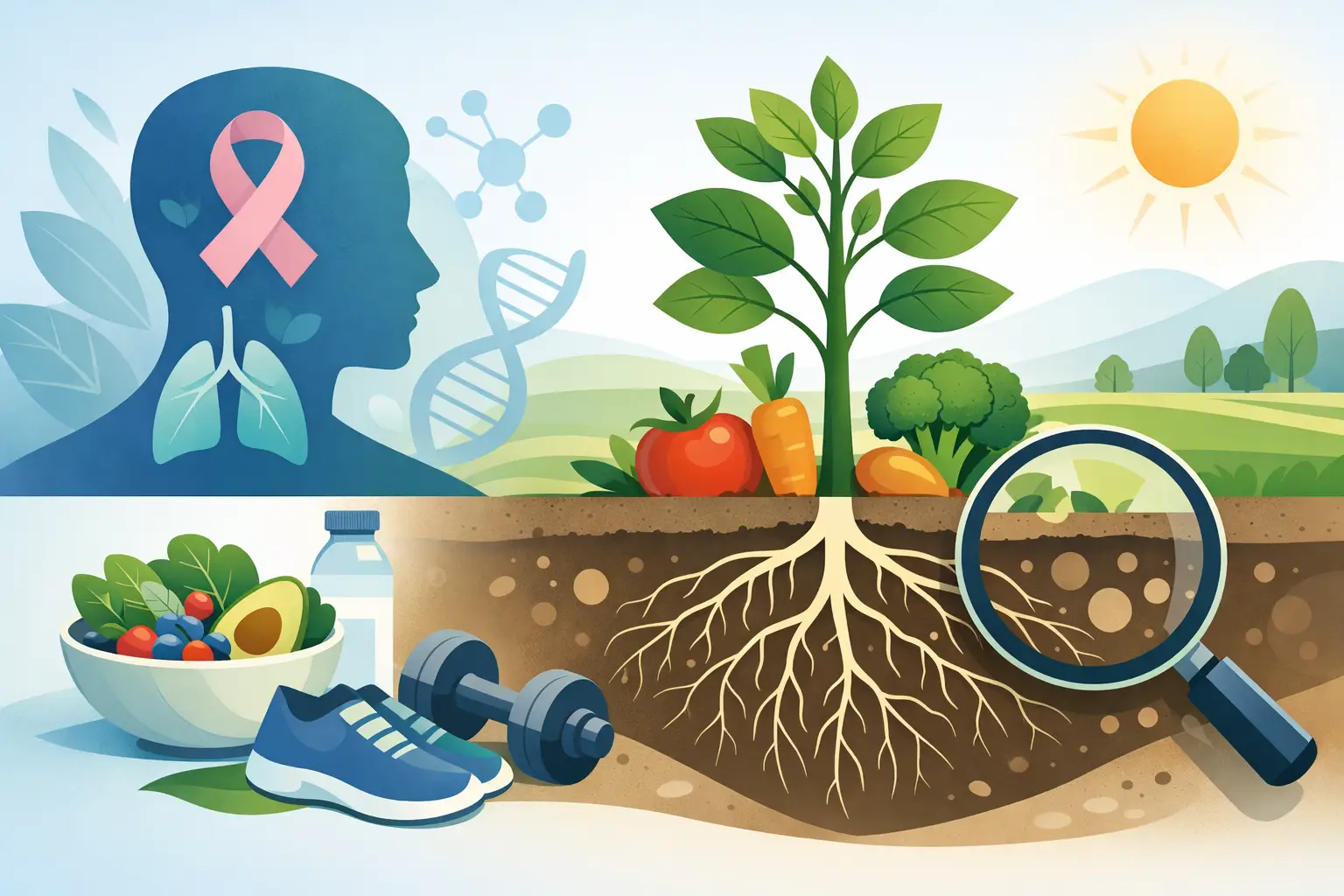
Cancer is not one disease with one cause. It is a group of diseases shaped by age, genes, exposures, infections, hormones, and the daily conditions your body has to manage. That is why learning how to lower cancer risk should not begin with a miracle food, a supplement, or a single annual appointment. It begins with the roots.
Tobacco. High blood pressure. Insulin resistance. Chronic inflammation. Physical inactivity. Excess alcohol. Poor sleep. These are not separate issues reserved for separate specialists. They can influence cancer risk, heart attack risk, and cognitive decline at the same time.
No plan can guarantee that cancer will not happen. Some cancers arise despite healthy habits, and inherited mutations or past exposures can substantially change a person’s risk. But prevention is still powerful. It means reducing avoidable risk, finding disease earlier when screening can help, and treating the health conditions that affect the whole body.
How to lower cancer risk by changing the risk factors
The most meaningful actions are often not glamorous. They are repeated, ordinary decisions that lower the biological strain placed on cells, blood vessels, the immune system, and metabolism over years.
Make tobacco a zero-tolerance risk
If you smoke, quitting is one of the strongest steps you can take for cancer prevention. Smoking is linked to cancers far beyond the lung, including cancers of the mouth, throat, esophagus, bladder, kidney, pancreas, stomach, cervix, and colon and rectum. It also raises the risk of heart attack and stroke.
There is no harmless level of cigarette smoking, and secondhand smoke matters too. If quitting has not worked before, that does not mean you have failed. Tobacco dependence is designed to be hard to overcome. Counseling, nicotine replacement, and prescription medications can make another attempt more effective. Ask a clinician to help build a plan rather than trying to rely on willpower alone.
Keep alcohol in perspective
Alcohol is a known cancer risk factor. It is associated with cancers including breast, liver, colorectal, mouth, throat, and esophageal cancer. The risk generally rises as drinking rises.
For cancer prevention, less alcohol is better. For some people, especially those with a history of alcohol use disorder, liver disease, certain medications, or elevated breast cancer risk, avoiding alcohol may be the clearest choice. If you drink, do not assume that wine is protective simply because it is often framed as heart-healthy. The full health picture matters, and alcohol is not a requirement for heart health.
Move your body and protect metabolic health
Physical activity helps regulate blood sugar, body weight, inflammation, hormones, sleep, and blood pressure. Those benefits reach across disease categories. Regular movement is associated with lower risk for several cancers, including colon, breast, and endometrial cancer, while also supporting cardiovascular and brain health.
The goal is not athletic perfection. A practical target for most adults is at least 150 minutes a week of moderate activity, such as brisk walking, plus muscle-strengthening activity on two days each week. Start below that if necessary. Ten minutes after dinner, a walk during a work break, or standing up more often is not the finished plan, but it is a real beginning.
Weight deserves a direct conversation without blame. Carrying excess body fat is linked with higher risk of multiple cancers. Yet weight is influenced by medications, mobility, sleep, stress, food access, hormones, and economics, not character. Focus on the conditions you can change: more movement, higher-fiber meals, fewer sugary drinks, better sleep, and medical support when needed. Even modest, sustained changes can improve metabolic markers.
Build meals around plants, fiber, and less processed meat
There is no single anti-cancer menu. Be skeptical of anyone who promises one. A more durable pattern emphasizes vegetables, fruits, beans, whole grains, nuts, and other minimally processed foods, while limiting processed meats such as bacon, sausage, hot dogs, and deli meat.
Fiber supports digestive health and helps with blood sugar and cholesterol management. Replacing highly processed foods with filling, nutrient-dense choices can also make it easier to manage weight without extreme dieting. The best eating pattern is one you can afford, enjoy, prepare, and maintain with your household.
Red meat does not have to be treated as forbidden, but frequency and portion size matter. Consider making plant proteins, fish, poultry, or beans more common choices and processed meat an occasional one. This is a risk-reduction strategy, not a purity test.
Prevention also means prevention appointments
Lifestyle matters. So do vaccines, screening, and medical care. Cancer prevention is not a private project completed in the kitchen or at the gym.
Screening can detect certain cancers or precancerous changes before symptoms appear. The right schedule depends on age, sex, family history, prior results, smoking history, and other personal factors. For US adults, common conversations include breast cancer screening, cervical cancer screening, colorectal cancer screening, lung cancer screening for eligible current or former smokers, and prostate cancer screening decisions.
Do not wait for symptoms and do ask about screening. Many early cancers cause no symptoms. At the same time, more testing is not automatically better. Screening has possible downsides, including false positives, follow-up procedures, overdiagnosis, and anxiety. A clinician can help you weigh those trade-offs based on your circumstances.
Know what runs in your family, and what does not
A family history of cancer does not mean cancer is inevitable. But it can change the age to begin screening, the type of screening to consider, or whether genetic counseling makes sense.
Talk with relatives when possible. Ask which cancers occurred, at what ages, and whether anyone has had genetic testing. Patterns that deserve special attention include cancer diagnosed at a young age, several relatives with the same or related cancers, a person with more than one primary cancer, or known inherited mutations in the family.
Bring that information to your primary care clinician. A written family history is far more useful than saying, “Cancer runs in my family.” Details help determine whether standard prevention advice is enough or whether a more tailored plan is needed.
Protect your skin, your air, and your sleep
Some cancer risks are environmental. Protect skin from ultraviolet radiation by seeking shade when practical, wearing protective clothing, and using broad-spectrum sunscreen. Avoid indoor tanning. A tan may look temporary, but ultraviolet damage can accumulate.
Sleep belongs in this conversation too. Poor sleep does not operate as a simple, direct cause of every cancer, but chronic sleep disruption can make it harder to manage weight, blood sugar, blood pressure, mood, and physical activity. Those pathways matter across cancer, heart disease, and brain health. Treat persistent snoring, insomnia, or daytime exhaustion as health concerns, not just inconveniences.
Make one integrated prevention plan
The strongest prevention plan is the one that addresses several risks at once. Schedule a primary care visit to review blood pressure, cholesterol, blood sugar, tobacco use, alcohol use, sleep, medications, family history, vaccines, and screening. That single conversation can reveal connections that are easy to miss when every condition is treated as separate.
Start with the highest-impact change available to you. For one person, it is quitting smoking. For another, it is finally scheduling a colonoscopy, getting a mammogram, walking after meals, reducing alcohol, or asking about uncontrolled diabetes. Small steps are not small when they become the conditions your body lives in every day.
Cancer. Heart attack. Dementia. The risks are different, but many of the roots overlap. Your next preventive appointment, your next smoke-free day, and your next walk are not promises. They are evidence that prevention has already begun.