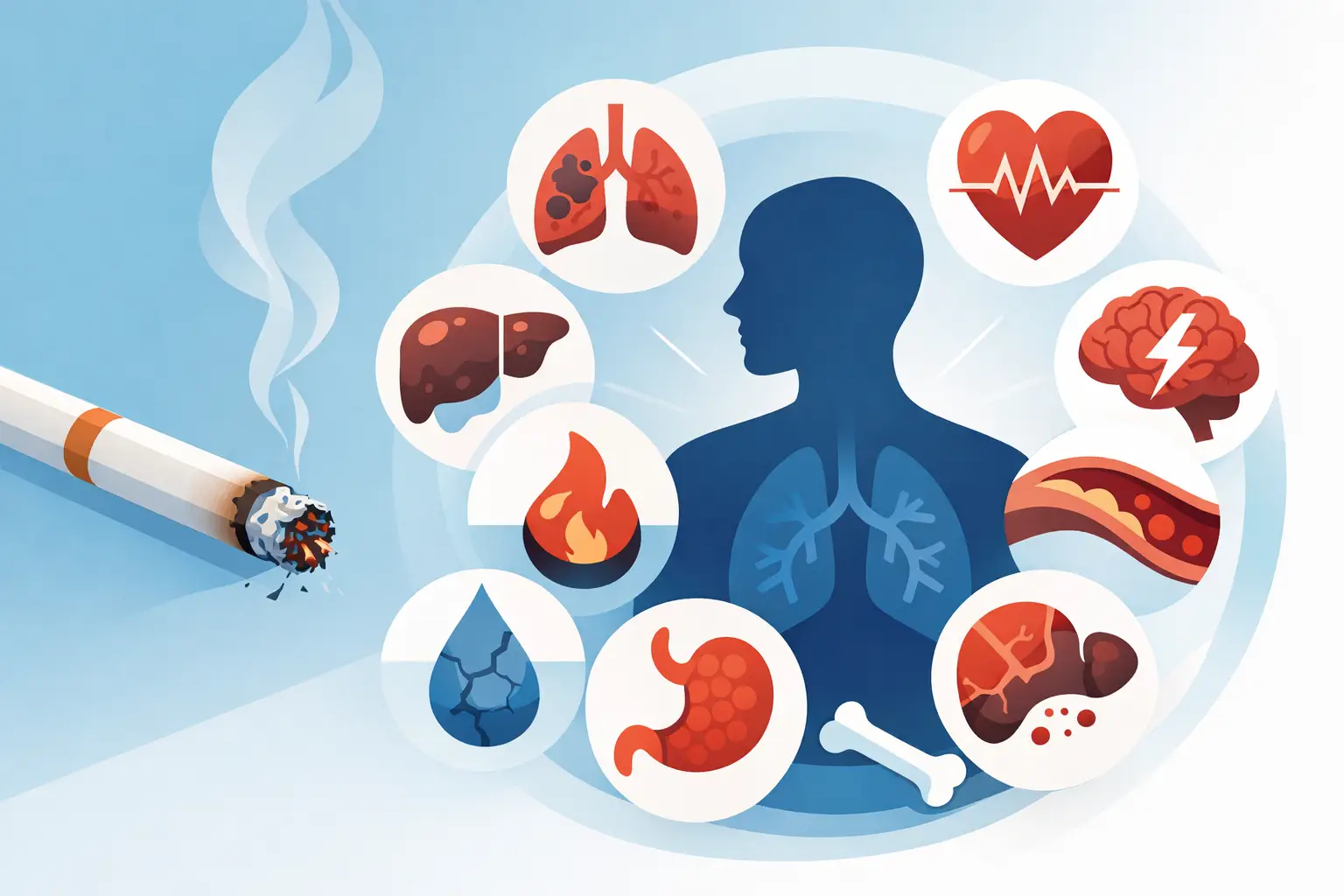
A cigarette does not damage just one organ. It changes the blood, inflames the airways, injures blood vessels, and exposes cells throughout the body to cancer-causing chemicals. So when people ask, smoking causes which chronic diseases?, the honest answer is not a short list. Smoking is tied to a network of long-term illnesses that can affect how you breathe, think, move, and age.
Dementia. Heart attack. Cancer. These are often discussed as separate fears. Tobacco shows why they should not be. The same smoking-related damage that narrows arteries can threaten the heart and brain. The same toxic exposure that harms lung tissue can trigger cancers far beyond the lungs. One habit. Many pathways of harm.
Smoking causes which chronic diseases?
Smoking causes or substantially increases the risk of many chronic diseases. The major categories include cardiovascular disease, chronic lung disease, cancer, diabetes, eye disease, and conditions that affect brain health and circulation. Risk is not identical for every smoker. It depends on how much and how long someone has smoked, age, genetics, existing health conditions, and exposure to secondhand smoke. But there is no safe amount of cigarette smoking.
Here are eight major chronic health risks connected to smoking:
- Coronary heart disease and heart attack
- Stroke and other vascular disease
- Chronic obstructive pulmonary disease, or COPD
- Lung cancer
- Cancers of the mouth, throat, esophagus, pancreas, bladder, kidney, cervix, colon, and more
- Type 2 diabetes and harder-to-control blood sugar
- Dementia risk through damage to the brain’s blood supply
- Age-related macular degeneration and other vision-threatening disease
That list is not meant to overwhelm. It is meant to clarify the stakes. Smoking does not simply raise the chance of one future diagnosis. It can create several overlapping risks at the same time.
Heart disease and stroke: damage to the circulation
Every cigarette delivers nicotine, carbon monoxide, and thousands of chemicals into the body. Carbon monoxide reduces the blood’s ability to carry oxygen. Nicotine can raise heart rate and blood pressure. Other chemicals damage the lining of blood vessels, making arteries more likely to become inflamed, narrowed, and clogged with plaque.
That process is central to coronary heart disease. When blood flow to the heart is blocked, a heart attack can occur. Smoking also makes blood more likely to clot, which can turn a narrowed artery into a medical emergency.
The brain depends on that same vascular system. A clot or blocked artery can cause an ischemic stroke. A weakened blood vessel can rupture and cause a hemorrhagic stroke. Smoking raises the risk of both, and it can worsen the long-term consequences when a stroke occurs.
This is the shared-risk message that too often gets missed: a cigarette does not choose between the heart and the brain. It injures the circulation that keeps both alive.
COPD: when lung damage becomes permanent
Chronic obstructive pulmonary disease is not a single illness. It includes emphysema and chronic bronchitis, conditions that make it progressively harder to move air in and out of the lungs. Smoking is the leading cause of COPD in the United States.
In chronic bronchitis, smoking irritates and inflames the airways, leading to persistent cough and mucus production. In emphysema, it damages the tiny air sacs where oxygen enters the blood. The lungs lose surface area and elasticity. Breathing can become a daily struggle, not only during exercise but while doing ordinary tasks such as showering, dressing, or walking across a room.
Some breathing symptoms improve after quitting, especially cough and wheeze. But established COPD damage may not fully reverse. That is why prevention and early action matter so much.
Cancer: not only lung cancer
Lung cancer is the disease most people associate with smoking, and for good reason. Cigarette smoke contains many chemicals known to cause cancer. These substances can damage DNA, the instruction system inside cells. Over time, damaged cells may grow out of control.
But the smoke does not stay in the lungs. It passes through the mouth and throat, enters the bloodstream, and leaves the body through the kidneys and bladder. That is why smoking is linked to cancers throughout the body, including cancers of the mouth, larynx, pharynx, esophagus, stomach, pancreas, liver, kidney, bladder, cervix, colon and rectum, and acute myeloid leukemia.
Quitting lowers cancer risk, but the timeline differs by cancer type and smoking history. That is not a reason to delay. It is a reason to stop adding new exposure now. The body begins repairing itself after the last cigarette, even if it has been smoking for decades.
Diabetes and kidney risk: the metabolic connection
Smoking also affects metabolism. It can make the body less responsive to insulin, contributing to insulin resistance and a higher risk of type 2 diabetes. For people who already have diabetes, smoking makes complications more likely, including heart disease, nerve damage, circulation problems, and kidney disease.
This interaction is especially serious because diabetes and smoking can accelerate the same vascular damage. High blood sugar harms blood vessels. Tobacco toxins harm blood vessels. Together, they put more pressure on the heart, brain, kidneys, eyes, and feet.
Kidneys are particularly vulnerable because they filter blood continuously. Smoking can worsen blood vessel disease that reduces kidney function and may contribute to chronic kidney disease, especially in people who have diabetes or high blood pressure.
Smoking, dementia, and the aging brain
Smoking does not mean dementia is inevitable, and dementia has many causes. Still, smoking is a significant modifiable risk factor for cognitive decline and several forms of dementia, particularly through its effect on the blood vessels that nourish the brain.
The brain needs a steady supply of oxygen-rich blood. Smoking reduces oxygen delivery, promotes artery damage, and raises stroke risk. Small, repeated injuries to the brain’s blood supply can add up over years. Vascular dementia can result from strokes or chronic vessel damage, and vascular disease can also coexist with Alzheimer’s disease.
This is why brain health cannot be separated from heart health. What damages the arteries can damage memory, thinking, and independence later in life. Protecting the brain includes protecting the blood vessels that serve it.
Secondhand smoke is not harmless
A person does not have to smoke to be harmed by tobacco smoke. Secondhand smoke can trigger immediate effects on the heart and blood vessels and raises the risk of heart disease, stroke, and lung cancer in nonsmokers. Children are especially vulnerable to respiratory problems because their lungs are still developing.
Opening a window, smoking in another room, or using air freshener does not remove the risk. Smoke particles and chemicals can linger in indoor spaces and settle on surfaces. A smoke-free home and car protect everyone in the household.
What changes after quitting?
Quitting is not a test of character. Nicotine addiction is powerful, and many people need more than one attempt. Medication, nicotine replacement products, counseling, text-based support, and a quit plan can all improve the odds of success. A clinician can help match support to a person’s medical history, medications, pregnancy status, and prior quit attempts.
The benefits begin earlier than many people realize. Heart rate and carbon monoxide levels improve quickly. Over time, circulation and lung function can improve, while risks for heart disease, stroke, COPD progression, and several cancers fall. The exact degree of recovery depends on the disease, the number of years smoked, and other health factors. But quitting at any age is still one of the strongest actions a person can take for longer-term health.
If you smoke and have chest pain, sudden weakness, severe shortness of breath, coughing up blood, or new confusion, seek urgent medical care. For prevention, do not wait for a frightening symptom or diagnosis to make tobacco part of the conversation with your health care team.
The next cigarette is not just a lung decision. It is a heart decision. A brain decision. A cancer-risk decision. Choosing to quit, or helping someone you love begin, protects more than one future at once.