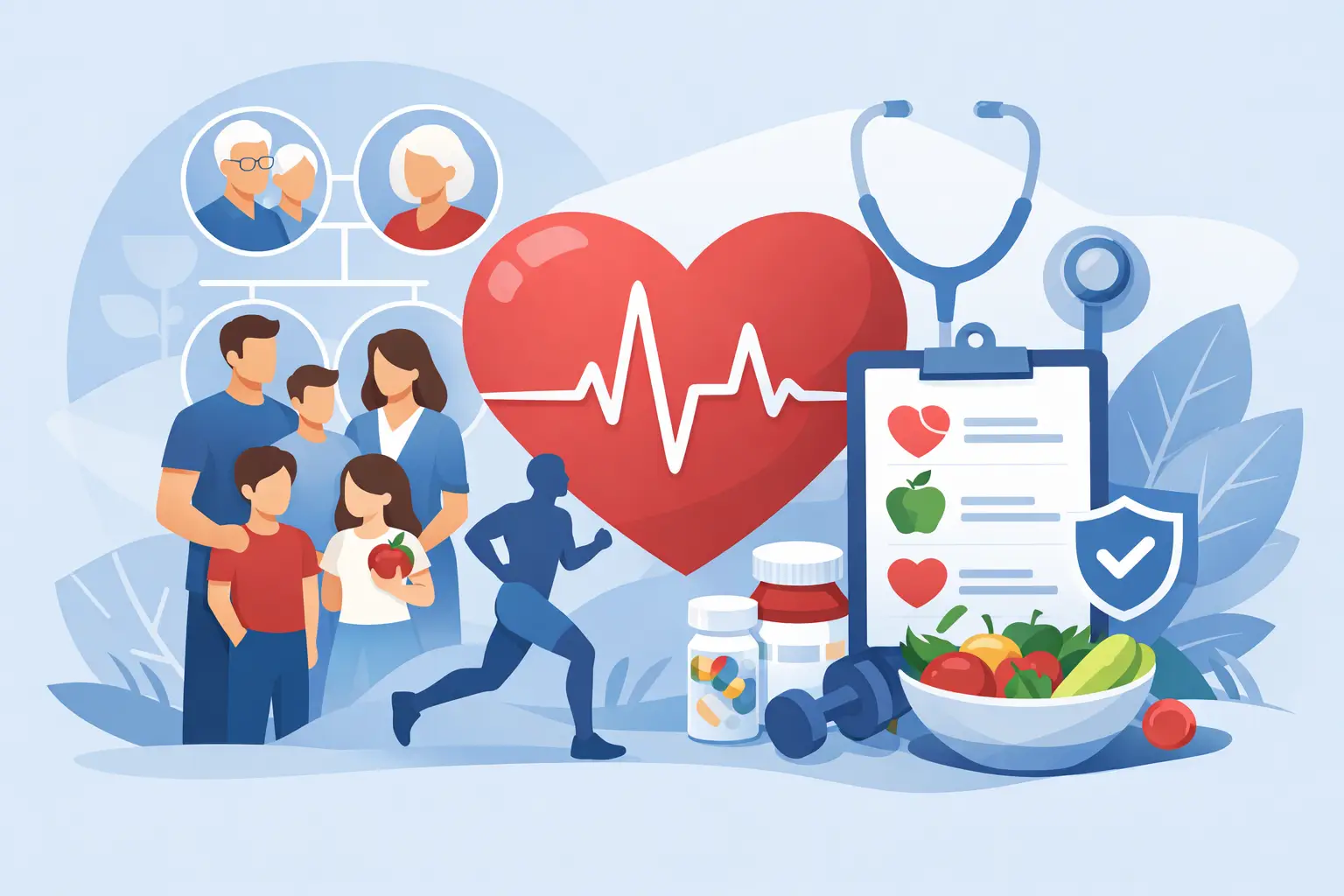
A parent’s heart attack at 54. A brother with a stent. A grandparent who died suddenly. These are not just family stories. They are health information. Family history of heart disease prevention begins when you treat that information as a reason to act early, not as a prediction that your future is already decided.
Heart disease can run in families for several reasons. Genes may affect cholesterol, blood pressure, blood clotting, blood sugar regulation, or the tendency to store body fat in harmful ways. Families also share meals, routines, stress, sleep patterns, smoking exposure, activity levels, and access to care. The risk is real. So is the opportunity to change its direction.
Dementia. Heart attack. Cancer. These are not always separate stories. Many of the same underlying conditions that damage blood vessels and raise heart risk can also affect brain health and influence cancer risk. A family history should widen the prevention conversation, not narrow it to one organ.
What a Family History Can Tell You
Heart disease is a broad term. It can include coronary artery disease, heart attack, stroke, heart failure, abnormal heart rhythms, inherited cardiomyopathies, and diseases of the aorta. The details matter because different diagnoses point to different risks and screening needs.
A close relative with early cardiovascular disease deserves particular attention. In general, “early” means a heart attack, stroke, bypass surgery, stent procedure, or diagnosed coronary disease before age 55 in a father or brother, or before age 65 in a mother or sister. This does not guarantee you will develop heart disease. It does mean routine prevention may need to begin sooner and go further.
Ask relatives, when possible, what happened and how old they were. “Heart problems” is useful, but “heart attack at 49,” “very high LDL cholesterol,” or “sudden cardiac death during exercise” is far more actionable. Write down conditions on both sides of the family, including strokes, diabetes, high blood pressure, high cholesterol, and unexplained early deaths.
One pattern deserves special attention: multiple relatives with very high cholesterol or heart disease at young ages. Familial hypercholesterolemia is an inherited condition that can cause dangerously elevated LDL cholesterol from birth. Lifestyle changes still matter, but they may not be enough on their own. Earlier testing and medication can be lifesaving.
Family History of Heart Disease Prevention Is Not One Test
A single “normal” checkup does not erase inherited risk. Prevention works best as a continuing process: measure the risk, understand the cause, make targeted changes, and reassess over time.
Start by bringing your family history to a primary care clinician or cardiologist. Ask for a clear review of your blood pressure, cholesterol, blood sugar, weight, tobacco use, sleep, activity, diet, and medications. These are not separate boxes on a chart. Together, they reveal the conditions that can quietly injure arteries for years.
For many adults with a strong family history, it is reasonable to ask whether standard cholesterol testing tells the full story. A clinician may consider additional testing such as lipoprotein(a), often written as Lp(a), which is largely inherited and can raise cardiovascular risk even when LDL cholesterol is not extreme. ApoB may also help clarify the number of cholesterol-containing particles that can enter artery walls.
Whether you need these tests depends on your history, age, current results, and access to care. The goal is not to chase every number. The goal is to find hidden risk early enough to do something about it.
Some people may benefit from a coronary artery calcium scan to help guide decisions about cholesterol-lowering medication. It is not a universal screening test, and it is not usually the first step for everyone. But for adults whose treatment path is uncertain, especially those with a meaningful family history, it can provide useful information about calcified plaque already present in the coronary arteries.
The Shared Drivers Demand a Shared Response
Arteries do not suddenly become diseased on the day of a heart attack. Damage often develops slowly through high LDL cholesterol, elevated blood pressure, insulin resistance or diabetes, smoking, chronic inflammation, inactivity, poor sleep, and excess body fat around the abdomen.
These drivers can affect more than the heart. High blood pressure can damage the small vessels that support memory and thinking. Diabetes raises the risk of cardiovascular disease and is linked with cognitive decline. Smoking harms blood vessels throughout the body and raises the risk of several cancers. A prevention plan that addresses these roots can protect more than one future diagnosis.
That does not mean every disease has the same cause or that healthy habits make anyone immune. Cancer, dementia, and heart disease are complex. Genetics, age, environment, infection, chance, and medical conditions all play a role. But common risk pathways are exactly why prevention deserves a whole-body strategy.
Lower LDL Cholesterol When It Needs Lowering
LDL cholesterol is not merely a lifestyle score. It is a causal contributor to plaque buildup in arteries. If your LDL is high, especially with early heart disease in the family, take the result seriously.
Food choices can help: emphasize vegetables, fruit, beans, whole grains, nuts, seeds, and unsaturated fats; choose fish and other lean proteins more often; and reduce foods high in saturated fat, refined carbohydrates, and added sugars. But genetics can make LDL difficult to control through food and exercise alone. Medication is not a personal failure. For the right person, it is prevention.
Treat Blood Pressure as a Silent Emergency
High blood pressure often causes no symptoms until it has already done harm. Know your numbers, and do not rely on a single rushed office reading if results are borderline. Home measurements, taken correctly and reviewed with a clinician, can offer a clearer picture.
Eating less sodium, being active, limiting alcohol, improving sleep, managing stress, and taking prescribed medication can all matter. The right combination depends on the person. What matters most is not letting elevated readings become background noise.
Move Enough to Change Your Biology
Exercise does not have to look like athletic training to be powerful. Regular brisk walking, cycling, swimming, dancing, or similar activity helps lower blood pressure, improve insulin sensitivity, support mood, and maintain function as you age. Strength training adds another layer by preserving muscle, balance, and metabolic health.
If you are inactive, begin where you are. Ten-minute walks count. Consistency changes risk more than an ambitious plan you abandon after two weeks. If you have chest pain, unexplained shortness of breath, fainting, or known heart disease, get medical guidance before starting a new intense routine.
Do Not Negotiate With Tobacco
Smoking and nicotine exposure are major cardiovascular threats. So is secondhand smoke. Quitting is difficult because nicotine addiction is powerful, not because a person lacks willpower. Counseling, medication, and repeated attempts can all be part of a successful quit plan.
Build a Family Plan, Not a Private Fear
The most useful family history is shared. Tell adult children and siblings if a relative had early heart disease, very high cholesterol, a stroke at a young age, or sudden cardiac death. Encourage them to bring that information to their own appointments.
This is not about alarming people. It is about ending the pattern in which crucial health information stays hidden until an emergency forces it into the open. One conversation can lead to an earlier cholesterol check, better blood pressure treatment, or a diagnosis of an inherited condition before irreversible damage occurs.
If you are a caregiver or the person in the family who keeps track of appointments, create a simple record of diagnoses, ages, medications, and major procedures. Update it when new information emerges. The facts do not need to be perfect to be useful.
Know When Symptoms Are an Emergency
Prevention includes knowing when not to wait. Call 911 for chest pressure, squeezing, pain that spreads to the arm, back, jaw, or stomach, sudden shortness of breath, cold sweat, nausea with chest discomfort, fainting, or signs of stroke such as face drooping, arm weakness, or speech difficulty. Heart attack symptoms can be less obvious in women, older adults, and people with diabetes. Do not drive yourself if you suspect an emergency.
Your family history is not a verdict. It is an early warning system. Use it to ask better questions, measure what matters, and address the shared drivers that can shape heart health, brain health, and long-term cancer risk. The next chapter of your family story can start with prevention.