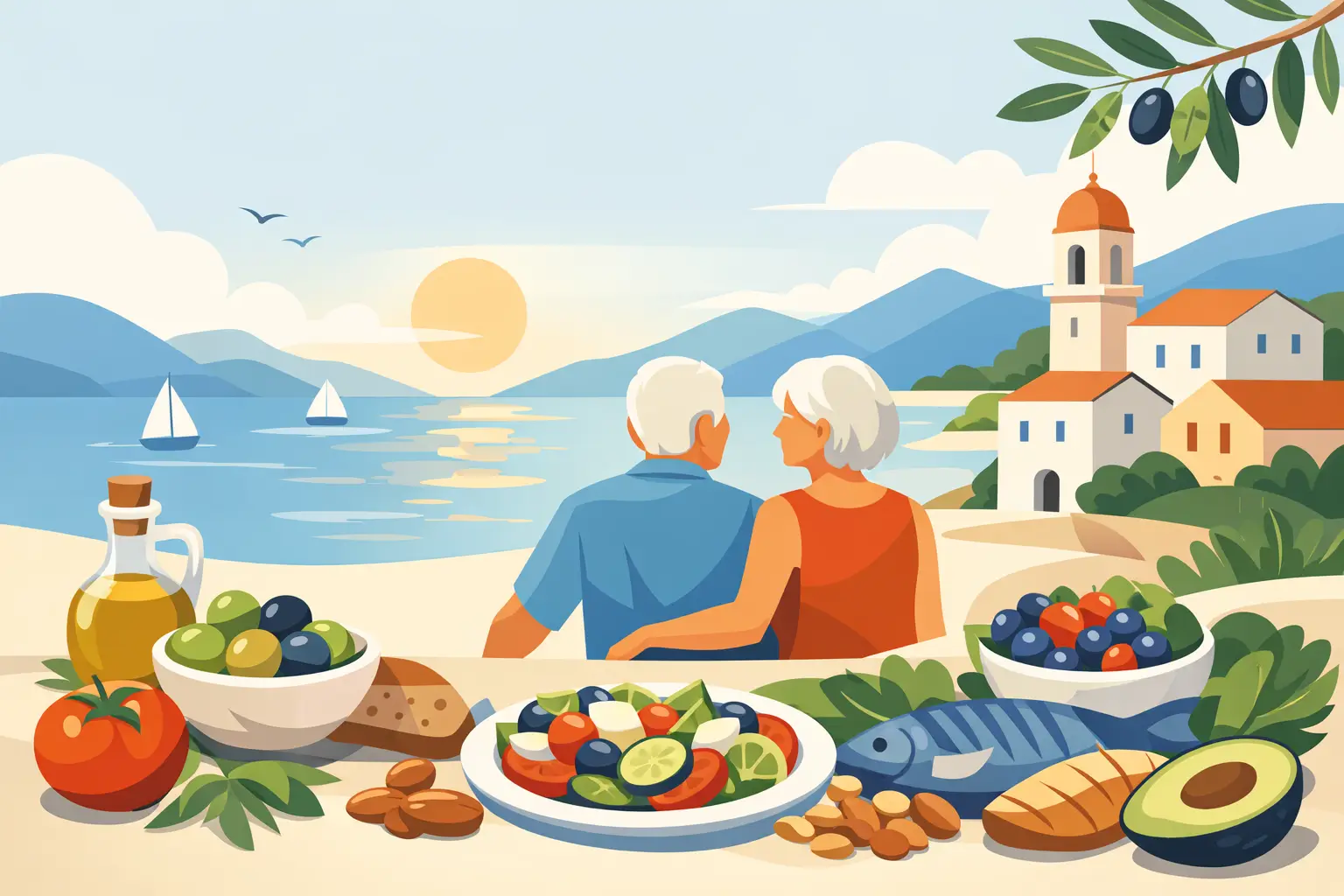
Dementia. Heart attack. Cancer. They are often discussed as separate threats, with separate specialists and separate prevention plans. But many of the forces that raise risk overlap. The Mediterranean diet for healthy aging matters because it addresses those shared forces at the dinner table, day after day.
This is not a diet trend built around restriction, detoxes, or a short-term challenge. It is a long-term eating pattern centered on vegetables, fruit, beans, whole grains, nuts, fish, olive oil, and minimally processed foods. For Americans thinking seriously about cognitive decline, cardiovascular disease, cancer risk, or a family history that feels impossible to ignore, that pattern offers a practical place to begin.
Mediterranean Diet for Healthy Aging: One Pattern, Many Pathways
The strongest case for the Mediterranean pattern is not that one meal can prevent a diagnosis. It cannot. Aging, genetics, medical history, tobacco exposure, physical activity, sleep, access to care, and plain chance all matter.
The case is that food influences several of the biological pathways these diseases share. High blood pressure can damage blood vessels in the heart and brain. Insulin resistance can raise the risk of type 2 diabetes, vascular disease, and some cancers. Chronic inflammation, excess body fat, poor cholesterol levels, and impaired blood-vessel function can create conditions in which multiple diseases become more likely.
A prevention strategy that only targets one organ misses the point. Brain health depends on blood flow. Heart health is shaped by metabolic health. Cancer risk is affected by body weight, alcohol use, dietary pattern, and inflammation. The body does not divide these risks into neat categories, even when the health care system does.
Mediterranean-style eating is associated with better cardiovascular outcomes and can support healthier blood pressure, cholesterol, blood sugar, and body weight when it replaces a highly processed diet. Those changes do not guarantee protection. They can, however, shift the conditions that make disease more likely over time.
What the Pattern Actually Looks Like
The Mediterranean diet is sometimes reduced to a shopping list of olive oil, salmon, and red wine. That is too narrow, and the wine part deserves particular caution. Alcohol is not required for this way of eating, and no one should start drinking to improve health. Alcohol raises the risk of several cancers, so less is generally safer.
The real pattern is simpler. Plants take up more space on the plate. Fiber-rich foods appear often. Fats come mainly from foods such as olive oil, nuts, seeds, avocado, and fish rather than from heavily processed snacks and large amounts of butter, shortening, or fatty meats. Fish and seafood are regular choices when accessible. Beans, lentils, eggs, yogurt, poultry, and cheese can all fit. Red and processed meats are less frequent, not necessarily forbidden.
For a US household, this can look familiar: oatmeal with berries and walnuts; a bean-based soup with a salad and whole-grain bread; baked chicken with roasted vegetables; tacos made with black beans, salsa, avocado, and corn tortillas; or canned salmon mixed into a grain-and-vegetable bowl.
The goal is not to imitate a single country’s cuisine. It is to use the underlying pattern with foods your household can afford, prepare, and enjoy consistently.
Fiber changes more than digestion
Beans, vegetables, fruit, oats, brown rice, whole-grain bread, and nuts deliver fiber that many Americans do not get enough of. Fiber can help with fullness, blood sugar control, cholesterol management, and digestive health. Replacing refined carbohydrates and ultra-processed snack foods with these options also tends to improve the overall quality of the diet without requiring perfect calorie counting.
For healthy aging, this matters because blood sugar and vascular health are not side issues. They are central to protecting the brain and heart. Small, repeatable substitutions can matter: beans instead of some of the meat in chili, fruit instead of a pastry most mornings, or popcorn and nuts instead of chips several nights a week.
Fat quality matters
A low-fat label does not automatically mean a heart-healthy choice. Many low-fat processed foods are high in refined starches, added sugar, or sodium. Mediterranean eating emphasizes unsaturated fats, especially olive oil, nuts, seeds, and fish, while limiting trans fats and reducing the saturated fat that often comes with processed meats and heavy reliance on butter, cream, and full-fat packaged foods.
This is not a command to pour olive oil on everything. It is a question of replacement. Use olive oil in place of some butter. Choose nuts in place of candy or crackers. Choose fish or beans in place of processed meat more often. The health effect comes from the pattern of substitutions, not from one “superfood.”
Processing and sodium deserve attention
Packaged food is not automatically harmful, and convenience is real. Frozen vegetables, canned beans, plain yogurt, canned fish, and bagged salad can make healthier eating more realistic. The bigger concern is frequent reliance on ultra-processed foods that are easy to overeat and often high in sodium, refined grains, added sugar, or unhealthy fats.
High sodium intake can worsen blood pressure, a major risk factor for stroke, heart disease, and vascular cognitive impairment. Read labels when you can, rinse canned beans, and use herbs, spices, citrus, garlic, and vinegar to build flavor. These are not glamorous changes. They are protective ones.
The Trade-Offs Are Real
A Mediterranean pattern is often presented as effortless. For many families, it is not. Fresh fish can be expensive. Cooking time may be limited. Cultural food traditions deserve respect, not replacement. And a person managing diabetes, kidney disease, digestive conditions, food allergies, or swallowing difficulties may need a more tailored approach.
The answer is not to abandon the pattern. It is to adapt it. Canned tuna, salmon, or sardines can be lower-cost fish options. Dried or canned beans can stretch meals. Frozen produce may be less expensive and lasts longer than fresh. Unsalted nuts are useful, but peanut butter can be a more affordable alternative. Brown rice is fine, but so are oats, corn, barley, or whole-grain pasta.
People taking blood thinners should not make abrupt, major changes to foods high in vitamin K without speaking with their clinician. Those with kidney disease may need individualized guidance on potassium, phosphorus, protein, or fluid intake. If you have diabetes and take glucose-lowering medication, changing carbohydrate intake can affect blood sugar. Food is powerful enough to require coordination with medical care.
Start Where Risk Is Highest
You do not need a complete kitchen overhaul. Begin with the habit most connected to your current risk.
If your blood pressure is high, focus first on sodium, packaged foods, and more potassium-rich produce if your clinician says it is appropriate. If blood sugar is rising, make breakfast and snack choices less refined and more fiber-rich. If cholesterol is a concern, replace processed meats and some saturated fats with beans, fish, nuts, and olive oil. If cancer prevention is your focus, increase plant foods, limit alcohol, and make processed meat an occasional choice rather than a routine one.
A useful first week might include three changes: cook one bean-based meal, eat fruit or vegetables at two meals a day, and replace one processed snack with nuts, fruit, plain yogurt, or air-popped popcorn. That may sound modest. It is modest. Modest actions repeated for years are more meaningful than an ambitious plan abandoned after two weeks.
Food Is One Root, Not the Only Root
The Mediterranean diet works best as part of a broader prevention framework. Movement helps regulate blood pressure, blood sugar, mood, and blood flow. Sleep affects appetite, metabolism, and cognition. Avoiding tobacco remains one of the most powerful actions a person can take to lower disease risk. Preventive care can identify high blood pressure, diabetes, high cholesterol, and cancers before symptoms force the issue.
No diet should become a reason to delay screening, ignore symptoms, or stop prescribed medication. A healthy eating pattern supports medical care. It does not replace it.
Healthy aging is not about chasing perfection or promising immunity from disease. It is about refusing to treat the brain, heart, and the rest of the body as disconnected. At your next meal, choose one food that supports the whole system – and make that choice easier to repeat tomorrow.