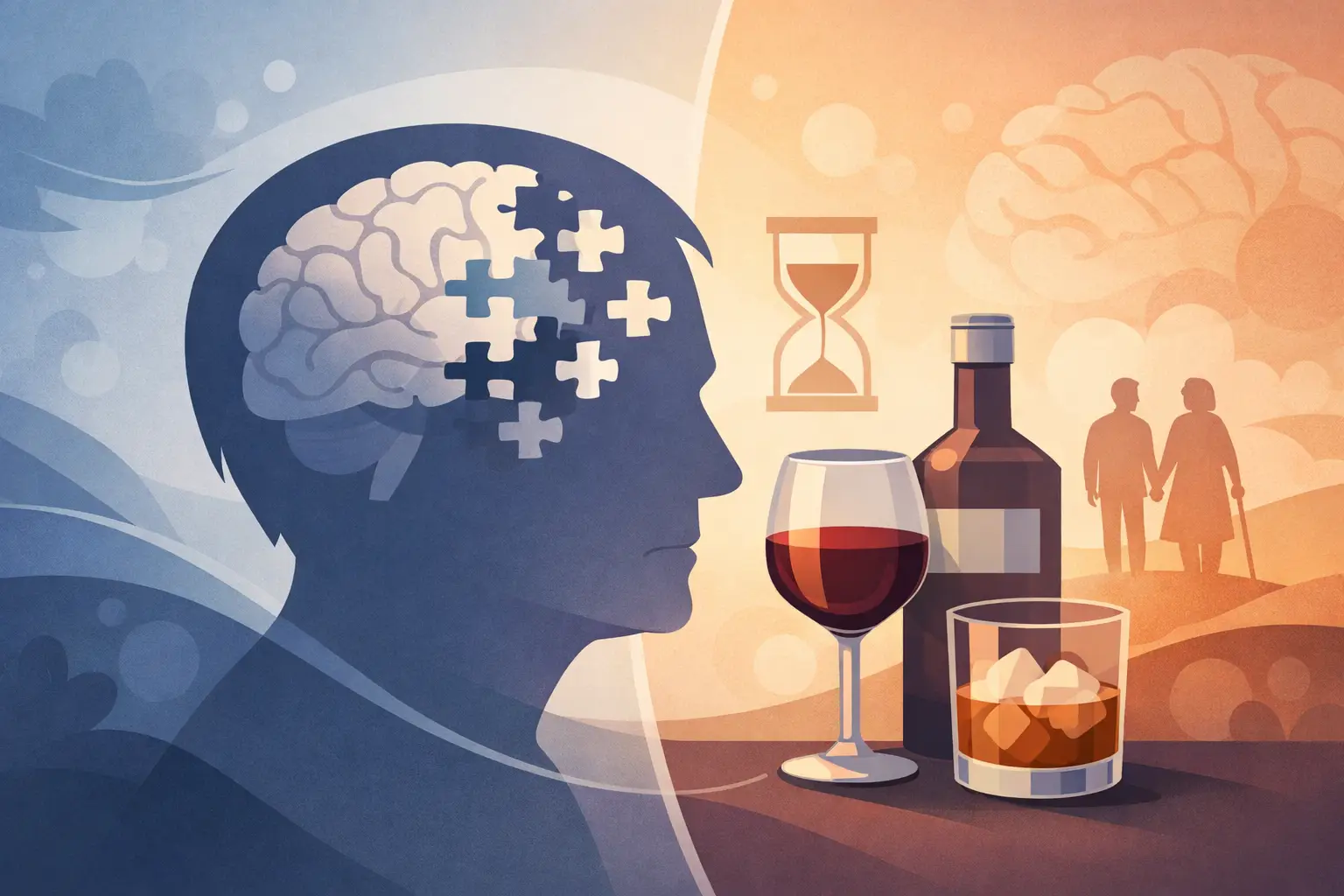
A nightly drink can feel ordinary. A few drinks at a celebration can feel harmless. But when the question is how alcohol affects dementia risk, the real issue is not whether one glass instantly damages the brain. It is what repeated exposure does to the systems that keep the brain supplied, protected, and functioning over decades.
Dementia. Heart attack. Cancer. These are not always separate stories. Alcohol can influence several shared pathways at once: blood pressure, heart rhythm, stroke risk, sleep, inflammation, metabolism, liver function, medication safety, and direct injury to brain tissue. That is why alcohol deserves more than a simple good-or-bad label.
How alcohol affects dementia risk over time
Heavy drinking is clearly associated with a higher risk of cognitive decline and dementia. It can cause direct alcohol-related brain damage, contribute to nutritional deficiencies, and increase the chance of falls and head injuries. It also raises the likelihood of conditions that damage the brain indirectly, including high blood pressure, atrial fibrillation, stroke, and diabetes.
The brain depends on healthy blood vessels. When alcohol repeatedly pushes blood pressure upward or contributes to irregular heart rhythms, the effects are not confined to the heart. Small vessel damage and strokes can reduce blood flow to brain tissue. Over time, this can contribute to vascular cognitive impairment, one of the most common pathways to dementia.
Alcohol can also interfere with memory and thinking long before a person receives a dementia diagnosis. Frequent intoxication affects attention, judgment, sleep quality, and the brain’s ability to form new memories. Those short-term effects may fade after alcohol leaves the body, but years of heavy use can leave lasting harm.
Heavy drinking is not the only concern
Risk is not limited to people who identify as having an alcohol use disorder. Pattern matters. Regularly having several drinks in one sitting, binge drinking on weekends, or using alcohol to fall asleep can create repeated stress on the brain and cardiovascular system even when someone does not drink every day.
For US adults, a standard drink is 12 ounces of regular beer, 5 ounces of wine, or 1.5 ounces of distilled spirits. Restaurant pours, large wine glasses, strong craft beers, and mixed drinks often contain more than one standard drink. Many people underestimate their intake simply because the serving size has changed.
There is no single threshold that guarantees safety for every person. Age, sex, body size, medications, medical history, sleep problems, liver health, and past drinking patterns all change the equation. For an older adult, the same amount of alcohol can lead to a higher blood alcohol level and greater impairment than it did decades earlier.
Why studies about moderate drinking can be confusing
You may have seen reports suggesting that light or moderate drinkers have lower dementia rates than people who do not drink. These findings should not be read as a prescription to start drinking for brain health.
Many of these studies are observational. They can show an association, but they cannot prove that alcohol protects the brain. People who drink lightly may differ from nondrinkers in other meaningful ways: income, social connection, diet, exercise, access to health care, and overall health. Some groups labeled as nondrinkers also include former drinkers who quit because of illness, which can make abstinence appear riskier than it is.
The potential picture is also different for someone with a history of heavy drinking. A person cannot cancel years of high exposure by shifting to a smaller daily amount later in life. And even if a small amount of alcohol appeared neutral for dementia in a particular study, alcohol can still raise risks elsewhere in the body, including several cancers.
That is the prevention question that matters: not, “Can I find a study that makes my current habit sound safe?” Instead ask, “What does this habit do to my total risk across brain, heart, and cancer pathways?”
Alcohol, sleep, and the brain’s nightly repair work
Alcohol is often used as a sleep aid because it may make people feel drowsy. But sedation is not the same as restorative sleep. Alcohol can fragment sleep later in the night, worsen snoring and sleep apnea, and reduce the quality of the sleep the brain needs for memory, mood, and daily recovery.
Poor sleep is not a minor inconvenience. It can worsen blood pressure, insulin resistance, depression, and cognitive performance. For people already worried about dementia because of family history, mild memory changes, or caregiving experience, protecting sleep is one of the most practical places to act.
If alcohol has become part of the bedtime routine, replacing the routine matters more than relying on willpower alone. A consistent wind-down time, a nonalcoholic drink, reduced late-night screen use, treatment for sleep apnea, or counseling for anxiety can address the reason alcohol was filling that role.
The shared-risk pathway: brain, heart, and cancer
Alcohol does not act on one organ in isolation. It can elevate blood pressure, add calories that complicate weight and blood sugar management, raise triglycerides, and trigger atrial fibrillation in susceptible people. Each of these can affect vascular health. Vascular health is brain health.
Alcohol also has direct cancer implications. The risk rises with intake for some cancers, and the idea that red wine is a health food can distract from that reality. Antioxidants in food do not turn alcohol into a preventive medicine. If someone enjoys wine, the relevant question is still how much, how often, and what it is displacing or worsening in their overall health.
This does not mean every person needs the same response. Someone who drinks rarely, has no medical contraindications, and stays within low-risk limits faces a different situation than someone with high blood pressure, liver disease, recurrent falls, sleep apnea, a history of stroke, or difficulty controlling intake. But the direction is clear: less alcohol generally means less alcohol-related harm.
When cutting back should become a priority
Consider a direct conversation with a clinician if drinking is affecting memory, sleep, mood, blood pressure, balance, relationships, work, or medication use. The same is true if you are drinking more than intended, needing more to get the same effect, or feeling shaky, anxious, sweaty, or nauseated when you stop.
Do not abruptly quit heavy daily drinking without medical guidance. Alcohol withdrawal can be dangerous and, in severe cases, life-threatening. Support may include supervised withdrawal, counseling, medications, peer support, and treatment for the stress, trauma, depression, pain, or insomnia that may be driving alcohol use.
For people who want to reduce intake, a practical plan is more effective than a vague promise. Track what you actually pour for two weeks. Choose alcohol-free days. Do not keep alcohol as the default drink at home. Eat before social events and decide your limit before the first drink. Tell one trusted person what you are changing.
These steps are not about perfection. They are about interrupting a pattern before it becomes a larger health problem.
A better question than “Is one drink okay?”
One drink is rarely the whole story. The more revealing questions are whether alcohol is raising your blood pressure, disrupting your sleep, interacting with medications, becoming a coping tool, or making it harder to protect the habits that lower dementia risk: movement, nutritious food, social connection, mental stimulation, and quality sleep.
For many families, dementia risk feels distant until memory problems appear. Prevention works on a longer timeline. The choices that protect blood vessels, reduce toxic exposures, improve sleep, and support mental health can matter years before a diagnosis is on the table.
Your brain does not age separately from the rest of your body. A smaller drinking habit, an honest conversation with a clinician, or a new way to handle stress can be a meaningful investment in the years ahead.