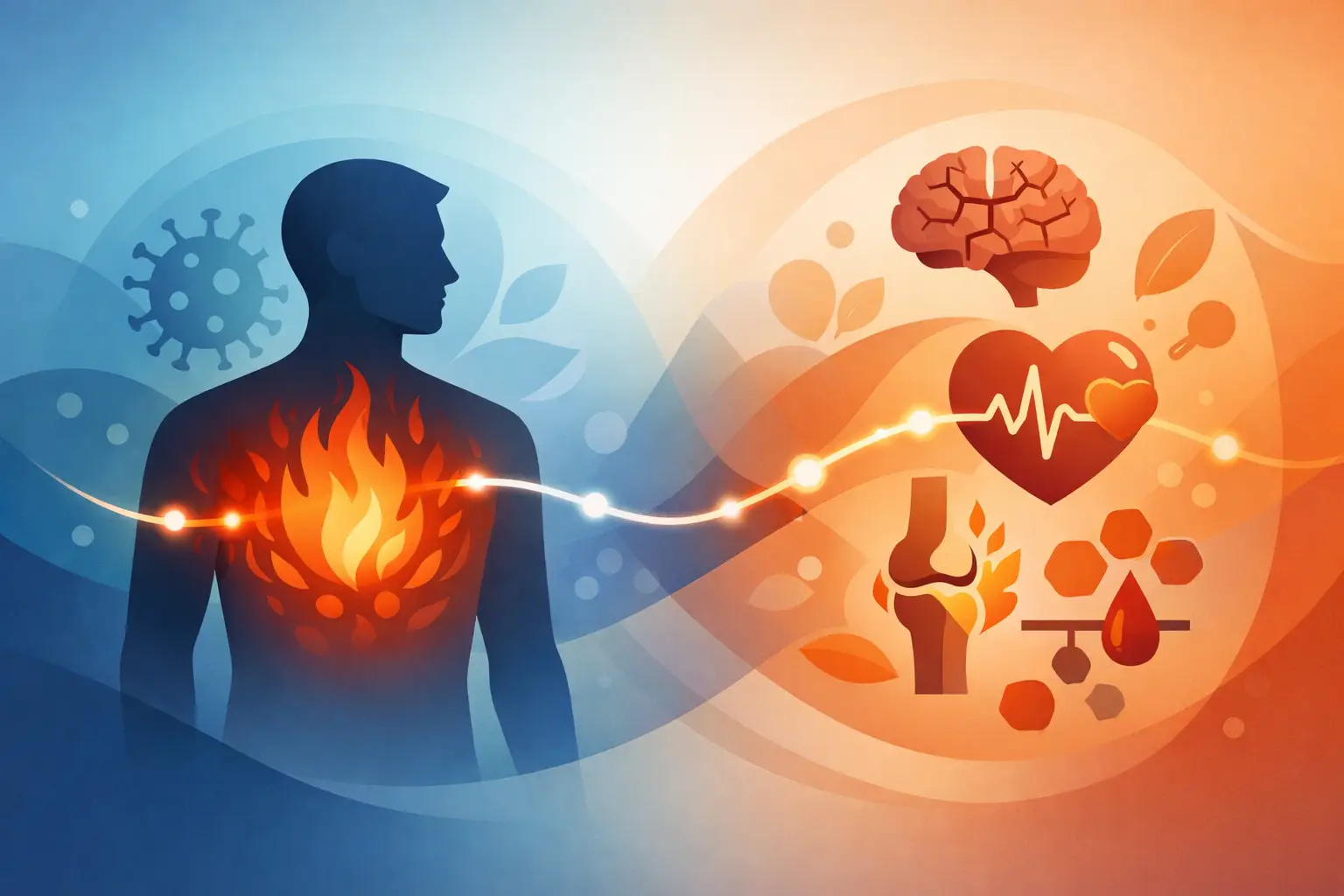
A heart attack. Dementia. Cancer. These may appear to be separate threats, each with its own specialists, screenings, and treatment plans. But inflammation and chronic disease often connect them long before a diagnosis appears. Persistent, low-grade inflammation can be part of the biological environment that damages blood vessels, disrupts metabolism, affects the brain, and helps certain cancers grow.
That does not mean inflammation alone causes every case. Age, genetics, infections, exposures, and chance all matter. It does mean that looking only at one disease at a time can miss a larger prevention opportunity. The same habits and health conditions that strain the heart may also influence brain health and cancer risk.
Inflammation Is Not Always the Enemy
Inflammation is a normal survival response. When you cut your finger or fight the flu, immune cells rush in, blood flow increases, and the body begins repair. This short-term response is useful. It is how healing happens.
The concern is chronic inflammation: an immune response that stays activated at a low level for months or years. It may not cause obvious pain, fever, or swelling. Instead, it can quietly contribute to tissue damage and interfere with the systems that regulate blood sugar, blood pressure, cholesterol, and immune surveillance.
Chronic inflammation is not one disease and it is not a diagnosis you should try to make from a single lab result. It is a process. C-reactive protein and other tests can sometimes offer clues, but results must be interpreted in context. A recent infection, injury, autoimmune condition, or even a hard workout can temporarily change them.
How Inflammation and Chronic Disease Intersect
The body does not divide itself into separate departments for the heart, brain, and immune system. Blood vessels carry oxygen and nutrients to every organ. Metabolic signals circulate throughout the body. Immune cells respond to threats wherever they find them. When these systems are under constant pressure, the effects can accumulate across more than one organ.
High blood pressure, insulin resistance, excess visceral fat, smoking, poor sleep, chronic stress, physical inactivity, and diets built around heavily processed foods can all contribute to inflammatory strain. Some are modifiable. Some are shaped by medications, income, work schedules, neighborhood conditions, or long-standing illness. Prevention must be realistic enough to account for all of that.
Heart attack risk
Inflammation can help drive atherosclerosis, the process in which plaque builds inside artery walls. Plaque is not simply a plumbing problem caused by cholesterol. It involves immune activity within the artery wall. Over time, inflamed plaque may become more likely to rupture, triggering a clot that blocks blood flow to the heart.
That is why heart risk cannot be reduced to one number. LDL cholesterol matters. So do blood pressure, blood sugar, smoking status, kidney health, weight distribution, movement, sleep, and family history. A person can feel well while vascular damage progresses silently.
Dementia risk
The brain depends on healthy blood flow. Vascular disease can damage the small blood vessels that support memory, attention, and thinking. It can also increase the risk of stroke, which may cause sudden or gradual cognitive changes.
Inflammation is being studied as part of several pathways involved in neurodegeneration, including Alzheimer’s disease. The science is still developing, and no one should assume that lowering inflammation guarantees dementia prevention. But the evidence is clear enough to act on a practical truth: protecting the heart and blood vessels is also a meaningful part of protecting the brain.
Cancer risk
Inflammation can support cancer development in several ways. Persistent tissue injury may increase cell turnover, creating more chances for errors during cell replication. Inflammatory signals can also affect how tumors grow, recruit blood supply, and evade immune defenses.
This relationship depends heavily on the cancer type. Chronic hepatitis can raise liver cancer risk. Long-standing inflammatory bowel disease can raise colorectal cancer risk. Tobacco smoke causes direct damage and inflammation. These examples are not reasons for fear. They are reasons to treat prevention, vaccination, screening, and follow-up care as connected parts of long-term health protection.
The Shared Drivers Deserve Earlier Attention
A prevention plan should not wait for chest pain, memory loss, or an abnormal scan. Many of the conditions linked to inflammation develop slowly, and early changes often produce no symptoms at all.
Start with the basics that have the broadest reach: know your blood pressure, cholesterol, blood sugar, weight trend, and waist measurement if your clinician recommends it. Ask whether you have insulin resistance, sleep apnea, fatty liver disease, chronic kidney disease, or an inflammatory condition that needs treatment. These are not side issues. They can be signals that multiple health systems are under pressure.
Family history deserves the same seriousness. If close relatives have had early heart disease, stroke, dementia, colorectal cancer, breast cancer, or other significant cancers, bring that information to your health care team. A family pattern does not determine your future, but it can change when screening should begin and which risks need closer attention.
Build a Plan That Protects More Than One Organ
The most effective response is rarely a dramatic cleanse, supplement stack, or short-term challenge. Chronic disease risk is shaped by repeated exposures over years. The goal is to reduce the load on the body in ways you can sustain.
Regular physical activity helps improve blood pressure, insulin sensitivity, circulation, mood, sleep, and inflammatory signaling. The right amount depends on your starting point, mobility, medications, and medical history. For some people, a daily walk is the right first move. For others, strength training, physical therapy, or a structured cardiac rehabilitation program may be safer and more effective.
Food choices matter, but perfection is not required. A pattern centered on vegetables, fruits, beans, whole grains, nuts, fish or other lean proteins, and minimally processed foods can support cardiometabolic health. If cost, access, dental issues, digestive symptoms, or cultural preferences make standard advice impractical, adapt the pattern rather than abandoning it.
Sleep and stress also belong in the conversation. Untreated sleep apnea can worsen blood pressure and metabolic health. Chronic stress can make it harder to manage eating, movement, smoking cessation, and medical appointments. Asking for help with sleep, anxiety, depression, caregiving strain, or substance use is not separate from prevention. It is prevention.
Keep Screening and Medical Care in the Picture
Lifestyle changes are powerful, but they are not a substitute for medical evaluation. Blood pressure medication, cholesterol-lowering therapy, diabetes treatment, smoking-cessation support, cancer screening, and recommended vaccines can reduce risk in ways that willpower alone cannot.
Be cautious with products marketed as anti-inflammatory cures. A supplement can interact with prescriptions, worsen bleeding risk, affect the liver, or delay needed care. If you have chest pressure, sudden weakness, facial drooping, trouble speaking, severe shortness of breath, or sudden confusion, seek emergency care immediately.
The strongest prevention question is not, What disease am I most afraid of? Ask instead: What shared drivers can I address now to protect my heart, brain, and body for the years ahead?